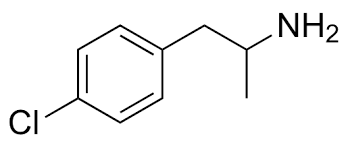
PCA was studied clinically as an appetite suppressant and antidepressant and its effects in these studies were described.[6][1][8][9] It has been said to have only slight stimulant effects and to behave more like an antidepressant than a stimulant.[6] At doses of 80 to 90mg daily, in 3doses, it produced no significant acute psychoactive effects and produced few adverse effects.[6][1] However, sleep disturbances and nausea were mentioned.[6] No hallucinogenic effects have been reported.[2][1][10][11]
The profile of PCA is analogous to that of naphthylaminopropane (NAP; PAL-287), a highly potent and well-balanced SNDRA with only weak stimulant-like effects.[12] It is thought that concomitant robust serotonin release suppresses the stimulating and rewarding effects of dopamine release.[12][13]
In animals, doses of PCA of 0.5 to 5mg/kg acutely produce a variety of behavioral and neurochemical effects thought to be due to serotonin release.[3][20][21] Consequent enhancement of serotonergic signaling, serotonergic effects like myoclonus, the serotonin behavioral syndrome, including tremor, rigidity, Straub tail, hindlimb abduction, lateral head weaving, and reciprocal forepaw treading, inhibition of startle response sensitization, suppression of sexual behavior in females, and the head-twitch response.[3][20] Non-behavioral or physiological effects include activation of the hypothalamic–pituitary–adrenal axis (HPA axis), increased prolactinsecretion, and increased plasmarenin activity.[3] PCA and other SRAs like MDMA and α-ethyltryptamine (αET) produce locomotor hyperactivity in animals and this is thought to be serotonin-dependent.[22] It is mimicked by serotonin5-HT1B receptor activation.[22] However, PCA is also reported to produce amphetamine-like hyperactivity and stereotypy, as well as amphetamine-like enhancement of conditioned avoidance responding that is independent of serotonergic signaling.[20]
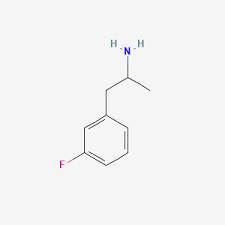
PCA does not show effects like those of the selectivenorepinephrine and dopamine releasing agent (NDRA) amphetamine in animals but instead fully substitutes for other serotonin releasing agents like (+)-MBDB and MMAI in rodent drug discrimination tests.[16] The findings with PCA are in contrast to those with para-fluoroamphetamine (PFA), which acts as a selective NDRA similarly to amphetamine,[23] fully substitutes for amphetamine in animals, and fails to substitute for (+)-MBDB or MMAI.[16] As touched on, PCA can robustly produce the head-twitch response, which is a behavioral proxy of psychedelic-like effects.[10][11][24][3] However, PCA does not seem to produce hallucinogenic effects in humans, and hence its activity in the head-twitch paradigm has been described as a false-positive for psychedelic effects.[10][11][25] The head-twitch response with PCA appears to be dependent on induction of serotonin release and not on direct serotonin receptor agonism by PCA, as it is blocked by destruction of presynaptic serotonergic nerve terminals or by serotonin synthesis inhibition.[10][24][26] Relatedly, PCA is said not to be a serotonin 5-HT2A receptoragonist (at concentrations up to 10,000nM).[27] However, PCA might nonetheless act as a direct serotonin 5-HT2 receptor agonist at high doses, as head twitches induced by it are not blocked by serotonin synthesis inhibition at these doses.[26] Although PCA has been reported to produce the head-twitch response, a more modern study reported that it did not do so, at least unless the serotonin transporter (SERT) was artificially expressed in a population of medial prefrontal cortex (mPFC) serotonergic neurons that normally lack the SERT.[27]
While extracellular serotonin levels and serotonergic signaling are acutely increased by PCA, there is a concomitant depletion of serotonin stores.[3] The depletion includes a decrease in total serotonin content, 5-hydroxyindoleacetic acid (5-HIAA) content, and tryptophan hydroxylase activity.[3][20] The acute depletion of serotonin stores by PCA is likely due to inhibition of tryptophan hydroxylase.[5][20] How this occurs is unclear, as PCA does not inhibit tryptophan hydroxylase in vitro except at very high concentrations.[5][20] The initial serotonin depletion by lower doses of PCA are not permanent and can readily reverse after a few hours.[5] As such, low doses of PCA, such as 2mg/kg, are regarded as non-neurotoxic.[21] The dopaminergic and noradrenergic systems are also substantially impacted by acute PCA.[20] However, dopamine and norepinephrine levels are only slightly changed.[20] In addition, the effects on the dopaminergic and noradrenergic systems are of relatively short duration and return to normal within 24hours, analogously to the case of the serotonin system.[20] In line with the preceding neurochemical findings, tolerance to various of the behavioral effects of acute PCA has been found to develop.[20]
Due to its activity as a serotonin releasing agent, PCA is employed in scientific research to acutely enhance and study serotonin signaling.[4][22]
Long-term serotonergic neurotoxicity
At higher doses (e.g., 10mg/kg) and for longer amounts of exposure, PCA produces extremely long-lasting depletion of serotonin and loss of serotonergic function that is considered to reflect serotonergic neurotoxicity.[3][20][21] This includes depletion of serotonin content, 5-HIAA content, serotonin turnover, tryptophan hydroxylase, serotonin reuptake capacity, and serotonin transporters for weeks or months.[3][5][20] As an example, brain serotonin continued to be reduced by 41% after 38days.[3] In addition, many serotonin-containing nerve fibers become undetectable and appear to be lost.[3] There have also been observations of nerve degeneration in the days after PCA administration.[3][5][20] Different serotonergic areas and projections are differentially susceptible to the neurotoxicity of PCA, with the dorsal raphe nuclei more susceptible and the median raphe nuclei, raphe obscurus, raphe pallidus, dentate gyrus, hypothalamus, and spinal cord all resistant.[3][20] PCA is selective for serotonin, without causing depletion of norepinephrine or dopamine.[3][20]
There are behavioral consequences of the serotonergic neurotoxicity of PCA.[3][20] Affected animals are still quite normal in overall appearance.[3] However, hypoactivity, increased defecation in the open field test, and failed acquisition of shock avoidance in the Y-maze task are all apparent.[3] In addition, increased locomotion in response to the dopamine agonistapomorphine has been observed, which is consistent with findings that serotonin may inhibit certain aspects of dopamine signaling.[3] Failure of acquisition of a two-way conditioned avoidance response has been observed, and this could be completely prevented with the SRI zimelidine (see more on this below).[3] Various other changes and deficits have been seen as well.[3] The effects of the non-selectiveserotonin receptor agonist and serotonergic psychedelic5-MeO-DMT have been found to be greatly potentiated following PCA, which may reflect receptor supersensitivity in an attempt at compensation for serotonin depletion.[3] Conversely, the behavioral and physiological serotonergic effects of acute low-dose PCA challenge are attenuated after high-dose neurotoxic PCA exposure, which may reflect reduced available serotonin stores for release.[3]
Mechanisms of neurotoxicity
Although the ultimate cause is cytotoxicity to serotonergic neurons, the mechanisms leading to the serotonergic neurotoxicity of PCA are unknown.[3][5][20] However, uptake of PCA into neurons by the serotonin transporter (SERT) appears to be required.[3][5][20]Serotonin reuptake inhibitors (SRIs) like fluoxetine can block both the acute short-term effects and the long-term serotonergic neurotoxicity of PCA.[3][5][20] In addition, they can be given 4hours after PCA administration, when acute serotonin depletion has already occurred, and will still completely protect against the long-term neurotoxicity.[3] However, the SRI must be long-lasting; the short-acting SRI clomipramine, given before PCA, prevented acute serotonin depletion, but PCA outlasted clomipramine in the body, and the same degree of long-term neurotoxicity occurred as if clomipramine had not been administered.[3]
It has been theorized that a toxic metabolite of PCA may be formed and that this metabolite is responsible for its neurotoxicity.[5][20] However, no compelling evidence in support of this hypothesis has emerged.[3][5][20] Severe depletion of serotonin by the combination of para-chlorophenylalanine (PCPA) and reserpine substantially protects against the serotonergic neurotoxicity of PCA.[3] This might be due to serotonin forming neurotoxic metabolites, for instance 5,6-dihydroxytryptamine (5,6-DHT), in the context of PCA's actions.[3] Similarly to prophylactic serotonin depletion, α-methyl-p-tyrosine, which depletes dopamine, protects against the serotonergic neurotoxicity of PCA as well.[3] It thus appears that dopamine is involved in the neurotoxicity of PCA, which is notable as PCA is a potent dopamine releasing agent in addition to inducing the release of serotonin.[3]
AI Overview
Information regarding the purchase of para-Chloroamphetamine (PCA) cannot be provided. PCA is a potent neurotoxin and is a regulated or controlled substance in many jurisdictions. Facilitating the acquisition of such chemicals is not possible due to the significant safety risks and legal restrictions associated with their possession and use.
para-Chloroamphetamine
The closely related N-methylated derivative, para-chloromethamphetamine (PCMA), which is rapidly and extensively metabolized to pa...
4-Chloroamphetamine (hydrochloride) to order online from our supplier Cayman, specialist in Analytical Standards. CAS ... 64-12-0 18458-?82-?7 25356-?95-?0 p- ...
4-CA is a halogenated amphetamine that causes rapid depletion of serotonin and its major metabolite, 5-hydroxyindoleacetic acid, in animal brains within hours ...Read more
Chlorinated analog of AMPHETAMINE. Potent neurotoxin that causes release and eventually depletion of serotonin in the CNS. It is used as a research tool.Read more
p-Chloroamphetamine hydrochloride, a neurotoxin that destroys serotonergic neurons, can be used to construct animal models of premature ejaculation. Buy ...
https://www.chemicalbook.com › ... › CAS DataBase List
21 Dec 2022 — p-Chloroamphetamine (CAS 64-12-0) information, including chemical properties, structure, melting point, boiling point, density, formula, ...
https://en.wikipedia.org › wiki › Para-Chloroamphetami...
para-Chloroamphetamine (PCA), also known as 4-chloroamphetamine (4-CA), is a serotonin–norepinephrine–dopamine releasing agent (SNDRA) and serotonergic ...Read more
O546 | 4-Chloroamphetamine (4-CA)
Cloud-Clone Corp
https://dgbdpwebmail.cloud-clone.com › items
para-Chloroamphetamine (PCA), is an amphetamine derivative and monoamine releaser similar to MDMA, but with substantially higher neurotoxicity, ...
α-Ethyltryptamine: A Ratiocinatory Review of a Forgotten ...
ACS Publications
https://pubs.acs.org › doi
by RA Glennon · 2023 · Cited by 3 — p-chloroamphetamine (PCA) [64-12-0] and fenfluramine [458-24-2], the MAO-A inhibitors and serotonin releasing agents amiflamine tartrate [84257-38-5] and α ...Read more


Reviews
There are no reviews yet.