Selegiline is used as an antidepressant in the treatment of major depressive disorder (MDD).[8][24] Both the oral selegiline and transdermal selegiline patch formulations are used in the treatment of depression.[24] However, oral selegiline is not approved for depression and is used off-label for this indication, while the transdermal patch is specifically licensed for treatment of depression.[4][8] Both standard clinical doses of oral selegiline (up to 10mg/day) and higher doses of oral selegiline (e.g., 30 to 60mg/day) have been used to treat depression, with the lower doses selectively inhibiting MAO-B and the higher doses producing dual inhibition of both MAO-A and MAO-B.[9][24] Unlike oral selegiline, transdermal selegiline bypasses first-pass metabolism, thereby avoiding inhibition of gastrointestinal and hepatic MAO-A and minimizing the risk of food and drug interactions, whilst still allowing for selegiline to reach the brain and inhibit MAO-B.[9]
A 2023 systematic review and meta-analysis evaluated the effectiveness and safety of selegiline in the treatment of psychiatric disorders including depression.[24] It included both randomized and non-randomized published clinical studies.[24] The meta-analysis found that selegiline was more effective than placebo in terms of reduction in depressive symptoms (SMDTooltip standardized mean difference = −0.96, k = 10, n = 1,308), response rates for depression improvement (RRTooltip risk ratio = 1.61, k = 9, n = 1,238), and response rates for improvement of depression with atypical features (RR = 2.23, k = 3, n = 136).[24] Oral selegiline was significantly more effective than the selegiline patch in terms of depressive symptom improvement (SMD = −1.49, k = 6, n = 282 vs. SMD = −0.27, k = 4, n = 1,026, respectively; p = 0.03).[24] However, this was largely due to older and less methodologically rigorous trials that were at high risk for bias.[24] Oral selegiline studies also often employed much higher doses than usual, for instance 20 to 60mg/day.[24] The quality of evidence of selegiline for depression was rated as very low overall, very low for oral selegiline, and low to moderate for transdermal selegiline.[24] For comparison, meta-analyses of other antidepressants for depression have found a mean effect size of about 0.3 (a small effect),[26][65] which is similar to that with transdermal selegiline.[24]
In two pivotal regulatory clinical trials of 6 to 8weeks duration, the selegiline transdermal patch decreased scores on depression rating scales (specifically the 17- and 28-item HDRSTooltip Hamilton Depression Rating Scale) by 9.0 to 10.9points, whereas placebo decreased scores by 6.5 to 8.6points, giving placebo-subtracted differences attributable to selegiline of 2.4 to 2.5points.[8] A 2013 quantitativereview of the transdermal selegiline patch for depression, which pooled the results of these two trials, found that the placebo-subtracted number needed to treat (NNT) was 11 in terms of depression response (>50% reduction in symptoms) and 9 in terms of remission of depression (score of ≤10 on the MADRSTooltip Montgomery–Åsberg Depression Rating Scale).[25] For comparison, other antidepressants, including fluoxetine, paroxetine, duloxetine, vilazodone, adjunctivearipiprazole, olanzapine/fluoxetine, and extended-releasequetiapine, have NNTs ranging from 6 to 8 in terms of depression response and 7 to 14 in terms of depression remission.[25] On the basis of these results, it was concluded that transdermal selegiline has similar effectiveness to other antidepressants.[25][66] NNTs are measures of effect size and indicate how many individuals would need to be treated in order to encounter one additional outcome of interest.[25] Lower NNTs are better, and NNTs corresponding to Cohen's d effect sizes have been defined as 2.3 for a large effect (d = 0.8), 3.6 for a medium effect (d = 0.5), and 8.9 for a small effect (d = 0.2).[25] The effectiveness of transdermal selegiline for depression relative to side effects and discontinuation was considered to be favorable.[25]
While several large regulatory clinical trials of transdermal selegiline versus placebo for depression have been conducted, there is a lack of trials comparing selegiline to other antidepressants.[57][66] Although multiple doses of transdermal selegiline were assessed, a dose–response relationship for depression was never established.[57][66] Transdermal selegiline has shown similar clinical effectiveness in the treatment of atypical depression relative to typical depression and in the treatment of anxious depression relative to non-anxious depression.[57][67][66]
Transdermal selegiline does not cause sexual dysfunction and may improve certain domains of sexual function, for instance sexual interest, maintaining interest during sex, and sexual satisfaction.[68] These benefits were apparent in women but not in men.[68] The lack of sexual dysfunction with transdermal selegiline is in contrast to many other antidepressants, such as the selective serotonin reuptake inhibitors (SSRIs) and serotonin–norepinephrine reuptake inhibitors (SNRIs), which are associated with high rates of sexual dysfunction.[69]
Transdermal selegiline patches have been underutilized in the treatment of depression compared to other antidepressants.[57][66] A variety of factors contributing to this underutilization have been identified.[57] One major factor is the very high cost of transdermal selegiline, which is often not covered by insurance and frequently proves to be prohibitive.[57][66] Conversely, other widely available antidepressants are much cheaper in comparison.[57][66]
Selegiline transdermal patch (Emsam), 6mg/24hours form
The transdermal patch form is also known as the "selegiline transdermal system" or "STS" and is applied once daily.[9][12][27][66][8] They are 20, 30, or 40cm2 in size and contain a total of 20, 30, or 40mg selegiline per patch (so 20mg/20cm2, 30mg/30cm2, and 40mg/40cm2), respectively.[8][66] The selegiline transdermal patch is a matrix-type adhesive patch with a three-layer structure.[8][66] It is the only approved non-oral MAOI, having reduced dietary restrictions and side effects in comparison to oral MAOIs, and is also the only approved non-oral first-line antidepressant.[66] The selegiline patch can be useful for those who have difficulty tolerating oral medications.[66]
The cytochrome P450enzymes involved in the metabolism of selegiline have not been fully elucidated.[5][21]CYP2D6 and CYP2C19metabolizerphenotypes did not significantly affect the pharmacokinetics of selegiline, suggesting that these enzymes are minimally involved in its metabolism and that inhibitors and inducers of these enzymes would not importantly affect its pharmacokinetics.[21][43][127][128] However, although most pharmacokinetic variables were unaffected, overall exposure to selegiline's metabolite levomethamphetamine was 46% higher in CYP2D6 poor metabolizers compared to extensive metabolizers and exposure to its metabolite desmethylselegiline was 68% higher in CYP2C19 poor metabolizers compared to extensive metabolizers.[43][127][128] As with the cases of CYP2D6 and CYP2C19, the strong CYP3A4 and CYP3A5 inhibitor itraconazole has minimal impact on the pharmacokinetics of selegiline, suggesting lack of major involvement of this enzyme as well.[21][129][6] On the other hand, the anticonvulsantcarbamazepine, which is known to act as a strong inducer of CYP3A enzymes,[130] has paradoxically been found to increase exposure to selegiline and its metabolites levomethamphetamine and levoamphetamine by approximately 2-fold (with selegiline used as the transdermal patch form).[8][9] One enzyme thought to be majorly involved in the metabolism of selegiline based on in-vitro studies is CYP2B6.[5][21][9][22] However, there are no clinical studies of different CYP2B6 metabolizer phenotypes or of CYP2B6 inhibitors or inducers on the pharmacokinetics of selegiline.[47] In addition to CYP2B6, CYP2A6 may be involved in the metabolism of selegiline to a lesser extent.[47][131]Birth control pills containing the syntheticestrogenethinylestradiol and a progestin like gestodene or levonorgestrel have been found to increase peak levels and overall exposure to oral selegiline by 10- to 20-fold.[21][132][133] High levels of selegiline can lead to loss of MAO-B selectivity and inhibition of MAO-A as well.[21][133] This increases susceptibility to side effects and interactions of non-selective monoamine oxidase inhibitors (MAOIs), such as tyramine-induced hypertensive crisis and serotonin toxicity when combined with serotonergic medications.[21][133] However, this study had a small sample size of four individuals as well as other methodological limitations.[21][133] The precise mechanism underlying the interaction is unknown, but is likely related to cytochrome P450 inhibition and consequent inhibition of selegiline first-pass metabolism by ethinylestradiol.[21] In contrast to birth control pills containing ethinylestradiol, menopausal hormone therapy with estradiol and levonorgestrel did not modify peak levels of selegiline and only modestly increased overall exposure (+59%).[21][132][134] Hence, menopausal hormone therapy does not pose the same risk of interaction as ethinylestradiol-containing birth control pills when taken together with selegiline.[132][134]
Overall exposure to selegiline with oral selegiline has been found to be 23-fold lower in people taking anticonvulsants known to strongly activate drug-metabolizing enzymes.[135] The anticonvulsants included phenobarbital, phenytoin, carbamazepine, and amobarbital.[135] In a previous study however, carbamazepine specifically did not reduce selegiline exposure.[8][9] Phenobarbital and certain other anticonvulsants are known to strongly induce CYP2B6, one of the major enzymes believed to be involved in selegiline metabolism.[135] As such, it was concluded that strong CYP2B6 induction was most likely responsible for the dramatically reduced exposure to selegiline observed in the study.[135]
Selegiline inhibition of cytochrome P450 enzymes
Selegiline has been reported to inhibit several cytochrome P450 enzymes, including CYP2D6, CYP3A4/5, CYP2C19, CYP2B6, and CYP2A6.[8][136] It is a mechanism-based inhibitor (suicide inhibitor) of CYP2B6 and has been said to "potently" or "strongly" inhibit this enzyme in vitro.[137][136][138][139] It may inhibit the metabolism of bupropion, a major CYP2B6 substrate, into its active metabolitehydroxybupropion.[137][136][138] However, a study predicted that inhibition of CYP2B6 by selegiline would non-significantly affect exposure to bupropion.[139] Selegiline has not been listed or described as a clinically significant CYP2B6 inhibitor by the Food and Drug Administration (FDA) as of 2023.[130][8] One small study observing three patients found that selegiline was safe and well-tolerated in combination with bupropion.[138][140] In addition to CYP2B6 and other cytochrome P450 enzymes, selegiline is a potent mechanism-based inhibitor of CYP2A6 and may increase exposure to nicotine (a major CYP2A6 substrate).[141][142] By inhibiting cytochrome P450 enzymes like CYP2B6 and CYP1A2, selegiline may inhibit its own metabolism and thereby interact with itself.[142][143]
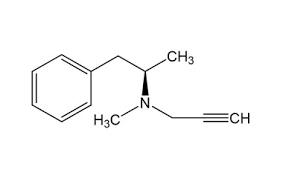
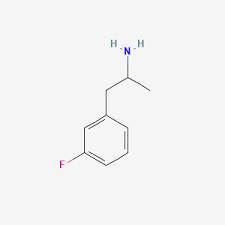
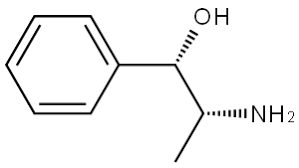
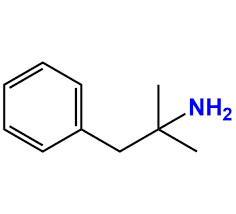
Selegiline is a close analogue of methamphetamine and amphetamine, and in fact produces their levorotatory forms, levomethamphetamine and levoamphetamine, as metabolites.[41][31] Selegiline is structurally similar to the antihypertensive agentpargyline (N-methyl-N-propargylbenzylamine), an earlier non-selective MAOI of the phenylalkylamine group.[163][36] Besides selegiline and pargyline, another clinically used MAOI of the phenylalkylamine and amphetamine families is the antidepressanttranylcypromine (trans-2-phenylcyclopropylamine).[47] Tranylcypromine can be conceptualized as a cyclized amphetamine and has amphetamine-like actions at high doses similarly to selegiline.[47][164][165] Another notable analogue of selegiline is 4-fluoroselegiline, a variation of selegiline in which one of the hydrogen atoms of the phenyl ring has been replaced with a fluorine atom.[166] A large number of other analogues of selegiline derived via structural modification have been synthesized and characterized.[167][166][168][169]Rasagiline ((R)-N-propargyl-1-aminoindan) is an analogue of selegiline in which the amphetamine base structure has been replaced with a 1-aminoindan structure and the N-methyl group has been removed.[41] Like selegiline, it is also a selective MAO-B inhibitor and used to treat Parkinson's disease.[41] In contrast to selegiline however, rasagiline lacks the amphetamine metabolites and activity of selegiline.[41] A further derivative of rasagiline, ladostigil ([N-propargyl-(3R)-aminoindan-5-yl]-N-propylcarbamate), a dual MAO-B inhibitor and acetylcholinesterase inhibitor, was developed for treatment of Alzheimer's disease and other conditions but was ultimately never introduced for medical use.[170]
Following the discovery in 1952 that the tuberculosis drug iproniazid elevated the mood of people taking it, and the subsequent discovery that the effect was likely due to inhibition of monoamine oxidase (MAO) and elevation of monoamine neurotransmitters in the brain, many people and companies started trying to discover monoamine oxidase inhibitors (MAOIs) to use as antidepressants.[11][175]Deprenyl, the racemic form of selegiline, was synthesized and discovered by Zoltan Ecseri at the Chinoin Pharmaceutical Company (part of Sanofi since 1993) in Budapest, Hungary.[11][176] Chinoin received a patent on the drug in 1962 and the compound was first published in the scientific literature in English in 1965.[11][177] Chinoin researchers had been studying substituted amphetamines since 1960, and decided to try synthesizing amphetamines that acted as MAOIs.[15] It had been known that methamphetamine was a reversible inhibitor of MAO.[15] Deprenyl, also known as N-propargyl-N-methylamphetamine,[36] is closely related to and inspired by pargyline (N-propargyl-N-methylbenzylamine), another MAOI that had been synthesized earlier.[11][15][178] Deprenyl was initially referred to by the chemical name phenylisopropylmethylpropinylamine and the developmental code name E-250.[11][15][177] Work on the biology and effects of E-250 in animals and humans was conducted by a group led by József Knoll at Semmelweis University, which was also in Budapest.[11]
Deprenyl is a racemic compound (a mixture of two isomers called enantiomers).[11][15] The racemic form has mild amphetamine-like psychostimulant effects that are diminished compared to those of amphetamine but are still present.[15] The levorotatory enantiomer has further reduced stimulant effects, and further work, published in 1967, determined that the levorotatory enantiomer was a more potent MAOI than the dextrorotatory enantiomer.[11][15][179][180] As a result, subsequent work was done with the single enantiomer L-deprenyl.[11][15][179][180] In 1968, it was discovered by J. P. Johnston that monoamine oxidase exists in multiple forms.[11][15][181] In 1971, Knoll showed that selegiline highly selectively inhibits the B-isoform of monoamine oxidase (MAO-B) and proposed that it is unlikely to cause the infamous "cheese effect" (hypertensive crisis resulting from consuming foods containing tyramine) that occurs with non-selective MAOIs.[11][15][182] The lack of potentiation of tyramine effect by deprenyl had previously been reported in 1966 and 1968 studies, but could not be mechanistically explained until after the existence of multiple forms of MAO was discovered.[11][15][183] Selegiline was the first selective MAO-B inhibitor to be discovered[13] and hence is described as prototypical of these agents.[47][48]
Deprenyl and selegiline were initially studied as antidepressants for treatment of depression.[50][177] Deprenyl was first found to be effective for depression from 1965 to 1967,[50][184][185] while selegiline was first found to be effective for depression in 1971 and this was further corroborated in 1980.[50][186][187] A 1984 study that combined selegiline with phenylalanine reported remarkably high effectiveness in the treatment of depression similar to that with electroconvulsive therapy (ECT).[50][188] However, selegiline in its original oral form was never further developed or approved for the treatment of depression.[50]
A few years after the discovery that selegiline was a selective MAO-B inhibitor, two Parkinson's disease researchers based in Vienna, Peter Riederer and Walther Birkmayer, realized that selegiline could be useful in Parkinson's disease. One of their colleagues, Moussa B. H. Youdim, visited Knoll in Budapest and took selegiline from him to Vienna. In 1975, Birkmayer's group published the first paper on the effect of selegiline in Parkinson's disease.[179][189]
Speculation, by József Knoll, that selegiline could be useful as an anti-aging and pro-sexual agent, began in the 1980s.[15][190][191][192][193]The New York Times reported that selegiline was being used non-medically as a "smart drug" by 1992.[194]
Selegiline was first introduced for clinical use in Hungary in 1977.[45] It was approved in the oral pill form under the brand name Jumex to treat Parkinson's disease.[45] The drug was then introduced in the United Kingdom in 1982.[45] In 1987, Somerset Pharmaceuticals in New Jersey, which had acquired the rights to develop selegiline in the United States, filed a New Drug Application (NDA) with the Food and Drug Administration (FDA) to market the drug for Parkinson's disease in this country.[46] While the NDA was under review, Somerset was acquired in a joint venture by two generic drug companies, Mylan and Bolan Pharmaceuticals.[46] Selegiline was approved for Parkinson's disease by the FDA in 1989.[46]
It had been known since the mid-1960s that high doses of deprenyl had psychostimulant effects.[17][11][177][185] Selegiline was first shown to metabolize into levomethamphetamine and levoamphetamine in humans in 1978.[31][195] The involvement of these metabolites in the effects and side effects of selegiline has remained controversial and unresolved in the decades afterwards.[31][41] In any case, concerns about these metabolites have contributed to the development of newer MAO-B inhibitors like rasagiline and safinamide that lack such metabolites.[41][196]
The catecholaminergic activity enhancer (CAE) effects of selegiline became well-characterized and distinctly named in 1994.[197][35][28][154][23][37][198][199][200] These effects had been observed much earlier, dating back to the 1960s and 1970s, but were not properly distinguished from the other actions of selegiline, like MAO-B inhibition, until the 1990s.[35][28][37][197] More potent, selective, and/or expansive monoaminergic activity enhancers (MAEs), like phenylpropylaminopentane (PPAP) and benzofuranylpropylaminopentane (BPAP), were derived from selegiline and other compounds and were first described in 1988 and 1999, respectively.[36][39][201][50][202] These drugs had been proposed for potential treatment of psychiatric disorders like depression as well as for Parkinson's disease and Alzheimer's disease, but were never developed or marketed.[145][37][39][146][50]
In the 1990s, J. Alexander Bodkin at McLean Hospital, an affiliate of Harvard Medical School, began a collaboration with Somerset to develop delivery of selegiline via a transdermal patch in order to avoid the well known dietary restrictions of MAOIs.[193][203][204] Somerset obtained FDA approval to market the patch for depression in 2006.[205] Similarly, the orally disintegrating tablet (ODT) form of selegiline, marketed under the brand name Zelapar, was approved for Parkinson's disease in the United States in 2006 and in the European Union in 2010.[45]
Binding to and agonism of the trace amine-associated receptors (TAARs) as the mechanism responsible for the MAE effects of selegiline and related MAEs like PPAP and BPAP was first suggested in the early 2000s following the discovery of the TAARs.[39][146][40] Activation of the TAAR1 as the mechanism of the MAE effects was first clearly substantiated in 2022.[206][38]
Society and culture
Names
Selegiline is the generic name of the drug and its INNTooltip International Nonproprietary Name, BANTooltip British Approved Name, and DCFTooltip Dénomination Commune Française, while selegiline hydrochloride is the USANTooltip United States Adopted Name.[207][208][162] The word "selegiline" is pronounced /səˈlɛdʒɪliːn/ (sə-LEJ-i-leen) or as "seh-LEH-ji-leen".[1][2] Selegiline is also known as L-deprenyl, L-deprenil, L-deprenalin, L-deprenaline, L-phenylisopropylmethylpropinylamine, and L-E-250.[23][207][208][162][177] It should not be confused with the racemic form, deprenyl (E-250), or with the dextrorotatoryenantiomer, D-deprenyl, which are distinct substances.[207][44][23]
Major brand names of selegiline include Eldepryl, Jumex, and Movergan (oral tablet and/or capsule), Zelapar (orally disintegrating tablet or ODT), and Emsam (transdermal patch).[3][162][156] Selegiline has been marketed under more than 70brand names worldwide.[209][3] The brand name "Emsam" was derived from the names of two children, Emily and Samuel, of one of the executives at Somerset Pharmaceuticals, the developer of Emsam.[66][210]
Generic forms
Generic forms of oral selegiline are available in the United States.[56] However, generic forms of the orally disintegrating tablet and the transdermal patch are not available in this country.[56][57] The latter formulations of selegiline are very expensive, and this can be prohibitive to their use.[57][211] There has been poor insurance coverage of the transdermal patch form for depression, with insurance companies often requiring patients to first fail to respond to one or two other antidepressants and to be responsible for larger copayments.[57] It is expected that generics of the transdermal patch will become available at some point in the future.[57]
Availability
Conventional oral selegiline (brand names Eldepryl, Jumex) is widely marketed throughout the world, including in over 70countries.[3][162][23][209] Conversely, the selegiline transdermal patch (brand name Emsam) is only marketed in the United States, while the selegiline orally disintegrating tablet (brand name Zelapar) is marketed in the United States, the United Kingdom, and the European Union.[3][45][23]
Notable users
József Knoll, one of the developers of selegiline, began taking a low 1mg daily dose of selegiline on January 1, 1989, at the age of 64.[148]: 92 [179] He reported in 2012 that this had continued for 22years uninterrupted.[148]: 92 Knoll stated that he had become so fascinated with the possible longevity-promoting effects of selegiline that he had decided to start taking it as a self-experiment.[148]: 92 [179] Knoll later died in 2018 at the age of 93.[212]David Pearce, a British transhumanistphilosopher, wrote his self-published book-length internet manifesto The Hedonistic Imperative[213] six weeks after starting to take selegiline.[214]Sam Bankman-Fried, the founder and former CEO of the FTXcryptocurrency exchange, is known to have used selegiline for depression in the form of the Emsam patch for at least 5 to 10years.[215][216] He is also known to have simultaneously taken Adderall for treatment of attention deficit hyperactivity disorder (ADHD)[215][216] and to have possessed non-pharmaceutical adrafinil, a prodrug of modafinil.[217]
Fictional representations
In Gregg Hurwitz's novel Out of the Dark, selegiline (Emsam) and tyramine-containing food were used to assassinate the president of the United States.[218]
Internet vendors
Selegiline in non-pharmaceutical form is sold on the Internet without a prescription by online vendors for uses such as purported cognitive enhancement (i.e., as a so-called "smart drug" or nootropic) and anti-aging effects.[219][154][220][55] It is widely available for such purposes, for instance under informal brand names like Dep-Pro, Selepryl, and Cyprenil, which are oral liquid solutions of selegiline at a concentration of 1mg per drop.[154][220][148]: 86
Presence in ecstasy
In his 1993 book E for Ecstasy examining the uses of the street drug ecstasy in the United Kingdom, the writer, activist, and ecstasy advocate Nicholas Saunders highlighted test results showing that certain consignments of the drug also contained selegiline.[221] Consignments of ecstasy known as "Strawberry" contained what Saunders described as a "potentially dangerous combination of ketamine, ephedrine and selegiline," as did a consignment of "Sitting Duck" Ecstasy tablets.[222]
József Knoll and his team are credited with having developed selegiline. Although selegiline's development as a potential treatment for Parkinson's disease, Alzheimer's disease, and depression was headed by other teams, Knoll remained at the forefront of research into the potential longevity enhancing effects of selegiline up until his death in 2018.[212][228][229] Knoll published his 2012 book How Selegiline ((–)-Deprenyl) Slows Brain Aging wherein he claims that:[148]: 90
In humans, maintenance from sexual maturity on (–)-deprenyl (1mg daily) is, for the time being, the most promising prophylactic treatment to fight against the age related decay of behavioral performances, prolonging life, and preventing or delaying the onset of age-related neurodegenerative diseases such as Parkinson's and Alzheimer's.
The mechanism of selegiline's longevity-promoting effect has been researched by several groups, including Knoll and his associates at Semmelweis University, Budapest.[23] The drug has been determined to be a catecholaminergic activity enhancer when present in minuscule concentrations far below those at which monoamine oxidase inhibitory activity can be observed, thereby potentiating the release of catecholamine neurotransmitters in response to stimuli. Knoll maintains that micro-doses of selegiline act as a synthetic analogue to a known or unknown trace amine in order to preserve the brain catecholaminergic system, which he perceives as integral to the organism's ability to function in an adaptive, goal-directed and motivated manner during advancing physical age:[148]: 70, 43
[...] enhancer regulation in the catecholaminergic brain stem neurons play[s] a key role in controlling the uphill period of life and the transition from adolescence to adulthood. The results of our longevity studies support the hypothesis that quality and duration of life rests upon the inborn efficiency of the catecholaminergic brain machinery, i.e. a high performing, long-living individual has a more active, more slowly deteriorating catecholaminergic system than its low performing, shorter living peer. Thus, a better brain engine allows for a better performance and a longer lifespan. [...]
Since the catecholaminergic and serotonergic neurons in the brain stem are of key importance in ensuring that the mammalian organism works as a purposeful, motivated, goal-directed entity, it is hard to overestimate the significance of finding safe and efficient means to slow the decay of these systems with passing time. The conclusion that the maintenance on (–)-deprenyl that keeps the catecholaminergic neurons on a higher activity level is a safe and efficient anti-aging therapy follows from the discovery of the enhancer regulation in the catecholaminergic neurons of the brain stem. From the finding that this regulation starts working on a high activity level after weaning and the enhanced activity subsists during the uphill period of life, until sexual hormones dampen the enhancer regulation in the catecholaminergic and serotonergic neurons in the brain stem, and this event signifies the transition from developmental longevity into postdevelopmental longevity, the downhill period of life.
Despite findings by Knoll that selegiline can prolong lifespan in rodents by 35% however, other studies have had conflicting findings and have even found increased mortality with selegiline in rodents.[54] In humans with Parkinson's disease, selegiline has been associated with cardiovascular and psychiatric complications and has not been found to reduce mortality in long-term studies.[54] As such, the claimed anti-aging and longevity benefits of selegiline have yet to be substantiated in humans and are controversial and uncertain.[54][53]
A small clinical study found that oral selegiline (10mg/day) reduced symptoms of social anxiety disorder.[12][24][238] The effectiveness was modest, with a reduction in social anxiety scores from baseline of 32% over 6weeks of treatment.[12][24][238] It was seemingly less effective than certain other agents used in the treatment of social anxiety, such as the non-selective MAOI phenelzine (45% symptom reduction) and the benzodiazepineclonazepam (51% symptom reduction), though it was similar to the SSRI sertraline (32% symptom decrease).[238]
ADHD
Selegiline has been limitedly studied in the treatment of attention deficit hyperactivity disorder (ADHD) in children, adolescents, and adults.[24][239][240][241] In a small randomized trial of selegiline for treatment of ADHD in children, there were improvements in attention, hyperactivity, and learning/memory performance but not in impulsivity.[242] A small clinical randomized trial compared selegiline to methylphenidate, a first line treatment for ADHD, and reported equivalent efficacy as assessed by parent and teacher ratings.[243] In another small randomized controlled trial of selegiline for the treatment of adult ADHD, a high dose of the medication for 6weeks was not significantly more effective than placebo in improving symptoms.[240][244][245] Selegiline in its transdermal patch form (brand name Emsam) has also been assessed in the treatment of ADHD in children and adolescents in a small open-labelpilot study sponsored by the manufacturer in 2003.[12][246] However, there was a high rate of discontinuation and development was not further pursued.[12][246]
Selegiline has been evaluated for smoking cessation both as a monotherapy and in combination with nicotine replacement therapy in five clinical studies.[257][258][24] However, it is limitedly or not effective for this use.[257][258][24] It was also evaluated for treatment of cocaine dependence in one study, but was similarly not effective.[259] Studies are mixed on whether selegiline, at MAO-B-selective doses, reduces the effects of cocaine in humans.[106][107][108][109][110][111] Selegiline, also at an MAO-B-selective dosage, did not modify or potentiate the pharmacological effects of intravenousmethamphetamine in a small clinical study.[104][105]
Sexual dysfunction
Selegiline has been assessed for treatment of sexual dysfunction induced by antipsychotics in people with schizophrenia, but was not effective in a single small clinical study.[260][261] It also did not improve sexual function in men with depression, but did improve several domains of sexual function in women with depression.[68]
Selegiline has been evaluated for the treatment of narcolepsy in three small clinical studies.[263][264][265] It was found to be effective in these studies.[263][264] A dosage of 10mg/day had no effect on symptoms, but 20 to 30mg/day improved alertness, mood, and somewhat reduced cataplexy, clinical effects that have been
Selegiline (Deprenyl) is a potent, selective and irreversible inhibitor of MAO-B, with an IC50 of 51 nM. Selegiline exhibits 450-flod selectivity for MAO-B ...
CAS#14611-51-9 | inhibitor of Type B monoamine oxidase
MedKoo Biosciences
https://www.medkoo.com › products
Selegiline is a selective, irreversible inhibitor of Type B monoamine oxidase. It is used in newly diagnosed patients with Parkinson's disease.
Zesla Chemicals And Pharmaceuticals - Offering Selegiline HCl Powder CAS No: 14611-51-9, USP at ₹ 100000/kg in Surat, Gujarat.
₹100,000.00
Selegiline | CAS No. 14611-51-9
CLEARSYNTH
https://clearsynth.com › product › selegiline
Buy Selegiline CAS No- 14611-51-9, a high quality product from Clearsynth, a Leading Manufacturer and Exporter of Selegiline accompanied by Certificate of ...
Selegiline | 14611-51-9
ChemicalBook
https://www.chemicalbook.com › ... › CAS DataBase List
4 May 2023 — Selegiline (CAS 14611-51-9) information, including chemical properties, structure, melting point, boiling point, density, formula, ...
Selegiline Hydrochloride 1.0 mg/ml in Methanol (as free ...
R(-)-Selegiline solution 1.0 mg/mL in methanol, ampule of 1 mL ... CAS Number: 14611-51-9; EC Number: 200-659-6; Synonyms: (-)-Deprenyl at Sigma-Aldrich.
Buy Selegiline-D5 Hydrochloride CAS No- 14611-51-9(freebase), a high quality product from Simson Pharma Limited, a Leading Manufacturer and Exporter of ...
Missing: deprenyl) | Show results with: deprenyl)
Selegiline | CAS No- 14611-51-9 | NA
Chemicea Pharmaceuticals
https://chemicea.com › product › selegiline
Buy high quality Selegiline with CAS No - 14611-51-9 from Chemicea Pharma. Chemicea Pharma is one of the leading manufacturer and exporter of Selegiline ...Read more
selegiline | CAS#:14611-51-9
cas号查询
https://www.chemsrc.com › cas › 14611-51-9_584259
26 Aug 2025 — Selegiline is a selective, irreversible inhibitor of Type B monoamine oxidase. It is used in newly diagnosed patients with Parkinson's disease.Read more
Reviews
There are no reviews yet.
Be the first to review “Buy Selegiline (L-deprenyl) Cas 14611-51-9” Cancel reply


Reviews
There are no reviews yet.