Notes: The smaller the value, the more strongly the substance releases the neurotransmitter. See also Monoamine releasing agent § Activity profiles for a larger table with more compounds.
Pseudoephedrine induces monoamine releasein vitro with an EC50Tooltip half maximal effective concentration of 224nM for norepinephrine and 1,988nM for dopamine, whereas it is inactive for serotonin.[25][89][85] As such, it is about 9-fold selective for induction of norepinephrine release over dopamine release.[25][89][85] The drug has negligible agonistic activity at the α1- and α2-adrenergic receptors (Kact >10,000nM).[25] At the β1- and β2-adrenergic receptors, it acts as a partial agonist with relatively low affinity (β1 = Kact = 309μM, IATooltip intrinsic activity = 53%; β2 = 10μM; IA = 47%).[90] It was an antagonist or very weak partial agonist of the β3-adrenergic receptor (Kact = ND; IA = 7%).[90] It is about 30,000 to 40,000times less potent as a β-adrenergic receptor agonist than (–)-isoproterenol.[90]
Pseudoephedrine's principal mechanism of action relies on its action on the adrenergic system.[91][92] The vasoconstriction that pseudoephedrine produces is believed to be principally an α-adrenergic receptor response.[93] Pseudoephedrine acts on α- and β2-adrenergic receptors, to cause vasoconstriction and relaxation of smooth muscle in the bronchi, respectively.[91][92] α-Adrenergic receptors are located on the muscles lining the walls of blood vessels. When these receptors are activated, the muscles contract, causing the blood vessels to constrict (vasoconstriction). The constricted blood vessels now allow less fluid to leave the blood vessels and enter the nose, throat, and sinus linings, which results in decreased inflammation of nasal membranes, as well as decreased mucus production. Thus, by constriction of blood vessels, mainly those located in the nasal passages, pseudoephedrine causes a decrease in the symptoms of nasal congestion.[2] Activation of β2-adrenergic receptors produces relaxation of the smooth muscle of the bronchi,[91] causing bronchial dilation and in turn decreasing congestion (although not fluid) and difficulty breathing.
Pseudoephedrine is less potent as a sympathomimetic and psychostimulant than ephedrine.[1][61] Clinical studies have found that pseudoephedrine is about 3.5- to 4-fold less potent than ephedrine as a sympathomimetic agent in terms of blood pressure increases and 3.5- to 7.2-fold less potent as a bronchodilator.[61] Pseudoephedrine is also said to have much less central effect than ephedrine and to be only a weak psychostimulant.[26][61][2][81][68]Blood vessels in the nose are around five times more sensitive than the heart to the actions of circulating epinephrine (adrenaline), which may help to explain how pseudoephedrine at the low doses used in over-the-counter products can produce nasal decongestion with minimal effects on the heart.[2] Compared to dextroamphetamine, pseudoephedrine is about 30 to 35times less potent as a norepinephrine releasing agent and 80 to 350times less potent as a dopamine releasing agentin vitro.[25][86][87]
Pseudoephedrine is a very weak reversible inhibitor of monoamine oxidase (MAO) in vitro, including both MAO-A and MAO-B (Ki = 1,000–5,800μM).[94] It is far less potent in this action than other agents like dextroamphetamine and moclobemide.[94]
Pseudoephedrine, due to its lack of polarphenolicgroups, is relatively lipophilic.[12] This is a property it shares with related sympathomimetic and decongestant agents like ephedrine and phenylpropanolamine.[12] These agents are widely distributed throughout the body and cross the blood–brain barrier.[12] However, it is said that pseudoephedrine and phenylpropanolamine cross the blood-brain barrier only to some extent and that pseudoephedrine has limited central nervous system activity, suggesting that it is partially peripherally selective.[26][27] The blood-brain barrier permeability of pseudoephedrine, ephedrine, and phenylpropanolamine is reduced compared to other amphetamines due to the presence of a hydroxyl group at the β carbon which decreases their lipophilicity.[27] As such, they have a greater ratio of peripheral cardiovascular to central psychostimulant effect.[27] Besides entering the brain, these substances also cross the placenta and enter breast milk.[12]
The plasma protein binding of pseudoephedrine has been reported to be approximately 21 to 29%.[10][11] It is bound to α1-acid glycoprotein (AGP) and albumin (HSA).[10][11]
Pseudoephedrine is excreted primarily via the kidneys in urine.[1][12] Its urinary excretion is highly influenced by urinary pH and is increased when the urine is acidic and is decreased when it is alkaline.[1][12][61]
The elimination half-life of pseudoephedrine on average is 5.4hours[2] and ranges from 3 to 16hours depending on urinary pH.[1][12] At a pH of 5.6 to 6.0, the elimination half-life of pseudoephedrine was 5.2 to 8.0hours.[12] In one study, a more acidic pH of 5.0 resulted in a half-life of 3.0 to 6.4hours, whereas a more alkaline pH of 8.0 resulted in a half-life of 9.2 to 16.0hours.[12] Substances that influence urinary acidity and are known to affect the excretion of amphetamine derivatives include urinary acidifying agents like ascorbic acid and ammonium chloride as well as urinary alkalinizing agents like acetazolamide.[80]
A majority of an oral dose of pseudoephedrine is excreted unchanged in urine within 24hours of administration.[12] This has been found to range from 43 to 96%.[1][12][2] The amount excreted unchanged is dependent on urinary pH similarly to the drug's half-life, as a longer half-life and duration in the body allows more time for the drug to be metabolized.[12]
The duration of action of pseudoephedrine, which is dependent on its elimination, is 4 to 12hours.[1][13]
Pseudoephedrine has been reported to accumulate in people with renal impairment.[95][96][97]
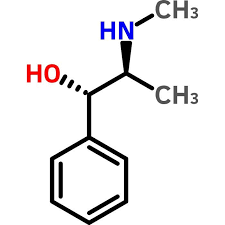
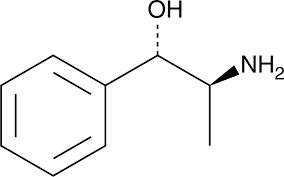
The dextrorotary (+)- or d- enantiomer is (1S,2S)-pseudoephedrine, whereas the levorotating (−)- or l- form is (1R,2R)-pseudoephedrine.
In the outdated D/L system (+)-pseudoephedrine is also referred to as L-pseudoephedrine and (−)-pseudoephedrine as D-pseudoephedrine (in the Fischer projection then the phenyl ring is drawn at bottom).[109][110]
Often the D/L system (with small caps) and the d/l system (with lower-case) are confused. The result is that the dextrorotary d-pseudoephedrine is wrongly named D-pseudoephedrine and the levorotary l-ephedrine (the diastereomer) wrongly L-ephedrine.
The IUPAC names of the two enantiomers are (1S,2S)- respectively (1R,2R)-2-methylamino-1-phenylpropan-1-ol. Synonyms for both are psi-ephedrine and threo-ephedrine.
Pseudoephedrine is the INNTooltip International Nonproprietary Name of the (+)-form, when used as pharmaceutical substance.[111]
Detection in body fluids
Pseudoephedrine may be quantified in blood, plasma, or urine to monitor any possible performance-enhancing use by athletes, confirm a diagnosis of poisoning, or to assist in a medicolegal death investigation. Some commercial immunoassay screening tests directed at the amphetamines cross-react appreciably with pseudoephedrine, but chromatographic techniques can easily distinguish pseudoephedrine from other phenethylamine derivatives. Blood or plasma pseudoephedrine concentrations are typically in the 50 to 300μg/L range in persons taking the drug therapeutically, 500 to 3,000μg/L in people with substance use disorder involving pseudoephedrine or poisoned patients, and 10 to 70mg/L in cases of acute fatal overdose.[112][113]
Manufacturing
Although pseudoephedrine occurs naturally as an alkaloid in certain plant species (for example, as a constituent of extracts from the Ephedra species, also known as ma huang, in which it occurs together with other isomers of ephedrine), the majority of pseudoephedrine produced for commercial use is derived from yeastfermentation of dextrose in the presence of benzaldehyde. In this process, specialized strains of yeast (typically a variety of Candida utilis or Saccharomyces cerevisiae) are added to large vats containing water, dextrose and the enzyme pyruvate decarboxylase (such as found in beets and other plants). After the yeast has begun fermenting the dextrose, the benzaldehyde is added to the vats, and in this environment, the yeast converts the ingredients to the precursor l-phenylacetylcarbinol (L-PAC). L-PAC is then chemically converted to pseudoephedrine via reductive amination.[114]
The bulk of pseudoephedrine is produced by commercial pharmaceutical manufacturers in India and China, where economic and industrial conditions favor its mass production for export.[115]
Pseudoephedrine is the generic name of the drug and its INNTooltip International Nonproprietary Name and BANTooltip British Approved Name, while pseudoéphédrine is its DCFTooltip Dénomination Commune Française and pseudoefedrina is its DCITTooltip Denominazione Comune Italiana.[118][119][120][121]Pseudoephedrine hydrochloride is its USANTooltip United States Adopted Name and BANMTooltip British Approved Name in the case of the hydrochloridesalt; pseudoephedrine sulfate is its USAN in the case of the sulfate salt; pseudoephedrine polistirex its USAN in the case of the polistirex form; and d-isoephedrine sulfate is its JANTooltip Japanese Accepted Name in the case of the sulfate salt.[118][119][120][121] Pseudoephedrine is also known as Ψ-ephedrine and isoephedrine.[118][120]
Brand names
The inclusion or exclusion of items from this list or length of this list is disputed. Please discuss this issue on the talk page.
The following is a list of consumer medicines that either contain pseudoephedrine or have switched to a less-regulated alternative such as phenylephrine.
Claritin-D (made by Bayer Healthcare) — contains 120 mg of pseudoephedrine sulfate (also 5 mg of loratadine).
Claritin-D 24 Hour (made by Bayer Healthcare) — contains 240 mg of pseudoephedrine sulfate (also 10 mg of loratadine).
Codral (made by Asia-Pacific subsidiary of Johnson & Johnson) — Codral Original contains pseudoephedrine, Codral New Formula substitutes phenylephrine for pseudoephedrine.
Congestal (made by SIGMA Pharmaceutical Industries) — contains 60 mg pseudoephedrine hydrochloride (also 650 mg paracetamol and 4 mg chlorpheniramine).[123][124]
Contac (made by GlaxoSmithKline) — previously contained pseudoephedrine, now contains phenylephrine. As at Nov 2014 UK version still contains 30 mg pseudoephedrine hydrochloride per tablet.
Demazin (made by Bayer Healthcare) — contains pseudoephedrine sulfate and chlorpheniramine maleate
Eltor (made by Sanofi Aventis) — contains pseudoephedrine hydrochloride.
Respidina – contains 120 mg of pseudoephedrine in the form of extended release tablets.
Rhinex Flash (made by Pharma Product Manufacturing, Cambodia) — contains pseudoephedrine combined with paracetamol and triprolidine.
Rhinos SR (made by Dexa Medica) — contains 120 mg of pseudoephedrine hydrochloride
Sinutab (made by McNeil Consumer Healthcare, a Kenvue Company) — contains 500 mg paracetamol and 30 mg pseudoephedrine hydrochloride.
Sudafed Decongestant (made by McNeil Consumer Healthcare) — contains 60 mg of pseudoephedrine hydrochloride. Not to be confused with Sudafed PE, which contains phenylephrine.
Theraflu (made by Novartis) — previously contained pseudoephedrine, now contains phenylephrine
Tylol Hot (made by NOBEL İLAÇ SANAYİİ VE TİCARET A.Ş., Turkey) — a packet of 20 g contains 60 mg pseudoephedrine hydrochloride, 500 mg paracetamol and 4 mg chlorpheniramine maleate
Unifed (made by United Pharmaceutical Manufacturer, Jordan) — contains pseudoephedrine hydrochloride (also triprolidine and guaifenesin).
Zyrtec-D 12 Hour (made by McNeil Consumer Healthcare, a Kenvue company) — contains 120 mg pseudoephedrine hydrochloride (also 5 mg of cetirizine).
Zephrex-D (made by Westport Pharmaceuticals) – a special meth-resistant form of pseudoephedrine that becomes gooey when heated.
Pseudoephedrine has been used as a performance-enhancing drug in exercise and sports due to its sympathomimetic and stimulant effects.[20][21] Because of these effects, pseudoephedrine can increase heart rate, elevate blood pressure, improve mental energy, and reduce fatigue, among other performance-enhancing effects.[20][21][23]
A 2015 systematic review found that pseudoephedrine lacked performance-enhancing effects at therapeutic doses (60–120mg) but significantly enhanced athletic performance at supratherapeutic doses (≥180mg).[20] A subsequent 2018 meta-analysis, which included seven additional studies, found that pseudoephedrine had a small positive effect on heart rate (SMDTooltip standardized mean difference = 0.43) but insignificant effects on time trials, perceived exertion ratings, blood glucose levels, and blood lactate levels.[21] However, subgroup analyses revealed that effect sizes were larger for heart rate increases and quicker time trials in well-trained athletes and younger participants, for shorter exercise sessions with pseudoephedrine administered within 90minutes beforehand, and with higher doses of pseudoephedrine.[21] A dose–response relationship was established, with larger doses (>170mg) showing greater increases in heart rate and faster time trials than with smaller doses (≤170mg) (SMD = 0.85 for heart rate and SMD = -0.24 for time trials, respectively).[21] In any case, the meta-analysis concluded that the performance-enhancing effects of pseudoephedrine were marginal to small and likely to be lower in magnitude than with caffeine.[21] It is relevant in this regard that caffeine is a permitted stimulant in competitive sports.[21]
Pseudoephedrine was on the International Olympic Committee's (IOC) banned substances list until 2004 when the World Anti-Doping Agency (WADA) list replaced the IOC list. Although WADA initially only monitored pseudoephedrine, it went back onto the "banned" list on 1 January 2010.[126]
Pseudoephedrine is excreted through urine, and the concentration in urine of this drug shows a large inter-individual spread; that is, the same dose can give a vast difference in urine concentration for different individuals.[127] Pseudoephedrine is approved to be taken up to 240 mg per day. In seven healthy male subjects, this dose yielded a urine concentration range of 62.8 to 294.4 microgram per milliliter (μg/mL) with mean ± standard deviation 149 ± 72 μg/mL.[128] Thus, normal dosage of 240 mg pseudoephedrine per day can result in urine concentration levels exceeding the limit of 150 μg/mL set by WADA for about half of all users.[129] Furthermore, hydration status does not affect the urinary concentration of pseudoephedrine.[130]
In February 2000, Elena Berezhnaya and Anton Sikharulidze won gold at the 2000 European Figure Skating Championships but were stripped of their medals after Berezhnaya tested positive. This resulted in a three-month disqualification from the date of the test, and the medal being stripped.[132] She stated that she had taken cold medication approved by a doctor but had failed to inform the ISU as required.[133] The pair missed the World Championships that year as a result of the disqualification.
Romanian gymnast Andreea Răducan was stripped of her gold medal at the 2000 Summer Olympic Games after testing positive. She took two pills given to her by the team coach for a cold. Although she was stripped of the overall gold medal, she kept her other medals, and, unlike in most other doping cases, was not banned from competing again; only the team doctor was banned for a number of years. Ion Țiriac, the president of the Romanian Olympic Committee, resigned over the scandal.[134][135]
In the 2014 Winter Olympic GamesTeam Sweden and Washington Capitals ice hockey player Nicklas Bäckström was prevented from playing in the final for usage of pseudoephedrine. Bäckström claimed he was using it as allergy medication.[137] In March 2014, the IOC Disciplinary Commission decided that Bäckström would be awarded the silver medal.[138] In January 2015 Bäckström, the IOC, WADA and the IIHF agreed to a settlement in which he accepted a reprimand but was cleared of attempting to enhance his performance.[139]
Manufacture of amphetamines
Its membership in the amphetamine class has made pseudoephedrine a sought-after chemical precursor in the illicit manufacture of methamphetamine and methcathinone.[1] As a result of the increasing regulatory restrictions on the sale and distribution of pseudoephedrine, pharmaceutical firms have reformulated medications to use alternative compounds, particularly phenylephrine, even though its efficacy as an oral decongestant has been demonstrated to be indistinguishable from placebo.[140]
In the United States, federal laws control the sale of pseudoephedrine-containing products.[141][142][143] Retailers in the US have created corporate policies restricting the sale of pseudoephedrine-containing products.[144][145] Their policies restrict sales by limiting purchase quantities and requiring a minimum age and government issued photographic identification.[142][143] These requirements are similar to and sometimes more stringent than existing law. Internationally, pseudoephedrine is listed as a Table I precursor under the United Nations Convention Against Illicit Traffic in Narcotic Drugs and Psychotropic Substances.[146]
Legal status
Australia
A warning at an Australian pharmacy
Illicit diversion of pseudoephedrine in Australia has caused significant changes to the way the products are regulated. As of 2006, all products containing pseudoephedrine have been rescheduled as either "Pharmacist Only Medicines" (Schedule 3) or "Prescription Only Medicines" (Schedule 4), depending on the amount of pseudoephedrine in the product. A Pharmacist Only Medicine may only be sold to the public if a pharmacist is directly involved in the transaction. These medicines must be kept behind the counter, away from public access.
Pharmacists are also encouraged (and in some states required) to log purchases with the online database Project STOP.[147]
As a result, some pharmacies no longer stock Sudafed, the common brand of pseudoephedrine cold/sinus tablets, opting instead to sell Sudafed PE, a phenylephrine product that has not been proven effective in clinical trials.[140][148][2]
Belgium
Until 2024, several formulations of pseudoephedrine were available over-the-counter in Belgium.[149] However, new legislation came into effect in November 2024, banning the over-the-counter sale of all medicines containing pseudoephedrine.[150][151]
Canada
Health Canada has investigated the risks and benefits of pseudoephedrine and ephedrine/Ephedra. Near the end of the study, Health Canada issued a warning on their website stating that those who are under the age of 12, or who have heart disease and may have strokes, should avoid taking pseudoephedrine and ephedrine. Also, they warned that everyone should avoid taking ephedrine or pseudoephedrine with other stimulants like caffeine. They also banned all products that contain both ephedrine (or pseudoephedrine) and caffeine.[152]
Products whose only medicinal ingredient is pseudoephedrine must be kept behind the pharmacy counter. Products containing pseudoephedrine along with other medicinal ingredients may be displayed on store shelves but may be sold only in a pharmacy when a pharmacist is present.[153][154]
Colombia
The Colombian government prohibited the trade of pseudoephedrine in 2010.[155]
Estonia
Pseudoephedrine is an over-the-counter drug in Estonia.[156]
Finland
Pseudoephedrine medicines can only be obtained with a prescription in Finland.[157][failed verification]
France
Pseudoephedrine-containing combination products were available over-the-counter from pharmacies, most commonly with paracetamol, under the brand names "Dolirhume","Actifed Rhyme Jour et Nuit" et al. Products combining pseudoephedrine and ibuprofen or certain antihistamines were also available (e.g. "Rhinadvil"). However, products containing pseudoephedrine as a single ingredient are not sold.[citation needed] In October 2023, the French health department officially warned against the usage of pseudoephedrine for patients with a cold. It also suggested the substance's availability could be restricted in the future, pending its pharmaceutical re-evaluation on EU level.[158][159] In December 2024, the government announced pseudoephedrine medicines would henceforth only be obtainable with a prescription.[160]
Germany
Various pseudoephedrine-containing products in combination with ibuprofen, aspirin, or antihistamines can be obtained without a prescription upon request at a pharmacy. Common names include Aspirin Complex, Reactine Duo, and RhinoPront. Products containing pseudoephedrine as a single ingredient are not available.[citation needed]
Japan
Medications that contain more than 10% pseudoephedrine are prohibited under the Stimulants Control Law in Japan.[161]
Mexico
On 23 November 2007, the use and trade of pseudoephedrine in Mexico was made illegal as it was argued that it was extremely popular as a precursor in the synthesis of methamphetamine.[162]
Netherlands
Pseudoephedrine was withdrawn from sale in 1989 due to concerns about adverse cardiac side effects.[163]
New Zealand
Since April 2024, pseudoephedrine has been classified as a restricted (pharmacist-only) drug in the Misuse of Drugs Act 1975 which allows the purchase of medicines containing pseudoephedrine from a pharmacist without a prescription.[164]
Pseudoephedrine, ephedrine, and any product containing these substances, e.g. cold and flu medicines, were first classified in October 2004 as Class C Part III (partially exempted) controlled drugs, due to being the principal ingredient in methamphetamine.[165] New Zealand Customs and police officers continued to make large interceptions of precursor substances believed to be destined for methamphetamine production. On 9 October 2009, Prime Minister John Key announced pseudoephedrine-based cold and flu tablets would become prescription-only drugs and reclassified as a class B2 drug.[166] The law was amended by The Misuse of Drugs Amendment Bill 2010, which passed in August 2011.[167]
In November 2023, the National-led coalition government announced that the sale of cold medication containing pseudoephedrine would be allowed (as part of the coalition agreement between the National and ACT parties).[168]
Switzerland
Pseudoephedrine is available without a prescription in combination (with aspirin) under the brand name "Aspirin Complex." There is also a preparation consisting of a single ingredient 120 mg extended-release tablet that can be obtained at pharmacies with a prescription or after consultation with a pharmacist.[citation needed]
Turkey
In Turkey, medications containing pseudoephedrine are available by prescription only.[169]
United Kingdom
In the UK, pseudoephedrine is available over-the-counter under the supervision of a qualified pharmacist, or on prescription. In 2007, the MHRA reacted to concerns over the diversion of ephedrine and pseudoephedrine for the illicit manufacture of methamphetamine by introducing voluntary restrictions limiting over-the-counter sales to one box containing no more than 720 mg of pseudoephedrine in total per transaction. These restrictions became law in April 2008.[170] No form of ID is required.
United States
Federal
The United States Congress has recognized that pseudoephedrine is used in the illegal manufacture of methamphetamine. In 2005, the Committee on Education and the Workforce heard testimony concerning education programs and state legislation designed to curb this illegal practice.[citation needed]
Attempts to control the sale of the drug date back to 1986, when federal officials at the Drug Enforcement Administration (DEA) first drafted legislation, later proposed by Senator Bob Dole, that would have placed several chemicals used in the manufacture of illicit drugs under the Controlled Substances Act. The bill would have required each transaction involving pseudoephedrine to be reported to the government, and federal approval of all imports and exports. Fearing this would limit legitimate use of the drug, lobbyists from over-the-counter drug manufacturing associations sought to stop this legislation from moving forward and were successful in exempting from the regulations all chemicals that had been turned into a legal final product, such as Sudafed.[171]
Before the passage of the Combat Methamphetamine Epidemic Act of 2005, sales of the drug became increasingly regulated, as DEA regulators and pharmaceutical companies continued to fight for their respective positions. The DEA continued to make greater progress in its attempts to control pseudoephedrine as methamphetamine production skyrocketed, becoming a serious problem in the western United States. When purity dropped, so did the number of people in rehab and people admitted to emergency rooms with methamphetamine in their systems. This reduction in purity was usually short-lived, however, as methamphetamine producers eventually found a way around the new regulations.[172]
Congress passed the Combat Methamphetamine Epidemic Act of 2005 (CMEA) as an amendment to the renewal of the USA Patriot Act.[142] Signed into law by President George W. Bush on 6 March 2006,[141] the act amended 21 U.S.C.§ 830, concerning the sale of pseudoephedrine-containing products. The law mandated two phases, the first needing to be implemented by 8 April 2006, and the second to be completed by 30 September 2006. The first phase dealt primarily with implementing the new buying restrictions based on the amount, while the second phase encompassed the requirements of storage, employee training, and record keeping.[173] Though the law was mainly directed at pseudoephedrine products it also applies to all over-the-counter products containing ephedrine, pseudoephedrine, and phenylpropanolamine, their salts, optical isomers, and salts of optical isomers.[173] Pseudoephedrine was defined as a "scheduled listed chemical product" under 21 U.S.C.§ 802(45(A)). The act included the following requirements for merchants ("regulated sellers") who sell such products:
Required a retrievable record of all purchases, identifying the name and address of each party, to be kept for two years
Required verification of proof of identity of all purchasers
Required protection and disclosure methods in the collection of personal information
Required reports to the Attorney General of any suspicious payments or disappearances of the regulated products
Required training of employees with regard to the requirements of the CMEA. Retailers must self-certify as to training and compliance.
The non-liquid dose form of regulated products may only be sold in unit dose blister packs
Regulated products must be stored behind the counter or in a locked cabinet in such a way as to restrict public access
Sales limits (per customer):
Daily sales limit—must not exceed 3.6 grams of pseudoephedrine base without regard to the number of transactions
30-day (not monthly) sales limit—must not exceed 7.5 grams of pseudoephedrine base if sold by mail order or "mobile retail vendor"
30-day purchase limit—must not exceed 9 grams of pseudoephedrine base. (A misdemeanor possession offense under 21 U.S.C.§ 844a for the person who buys it.)
The requirements were revised in the Methamphetamine Production Prevention Act of 2008 to require that a regulated seller of scheduled listed chemical products may not sell such a product unless the purchaser:[143]
Presents a government-issued photographic identification; and
Signs the written logbook with name, address, and time and date of the sale
State
Most states also have laws regulating pseudoephedrine.[174][175][176]
The states of Alabama, Arizona, Arkansas, California, Colorado, Delaware, Florida, Georgia, Hawaii (as of May 1, 2009) Idaho, Illinois, Indiana, Iowa, Kansas, Kentucky, Louisiana (as of August 15, 2009), Massachusetts, Michigan, Minnesota, Mississippi, Missouri, Montana, Nebraska,[177] Nevada, New Jersey, North Carolina, Ohio, Oklahoma, Oregon, Pennsylvania, South Dakota, Tennessee, Texas, Utah, Vermont, Virginia, Washington, West Virginia and Wisconsin have laws requiring pharmacies to sell pseudoephedrine "behind the counter." Though the drug can be purchased without a prescription, states can limit the number of units sold and can collect personal information from purchasers.[178]
The states of Oregon and Mississippi previously required a prescription for the purchase of products containing pseudoephedrine. However, as of 1 January 2022, these restrictions have been repealed.[179][180] The state of Oregon reduced the number of methamphetamine lab seizures from 448 in 2004 (the final full year before implementation of the prescription only law)[181] to a new low of 13 in 2009.[182] The decrease in meth lab incidents in Oregon occurred largely before the prescription-only law took effect, according to a NAMSDL report titled Pseudoephedrine Prescription Laws in Oregon and Mississippi.[178] The report posits that the decline in meth lab incidents in both states may be due to other factors: "Mexican traffickers may have contributed to the decline in meth labs in Mississippi and Oregon (and surrounding states) as they were able to provide ample supply of equal or greater quality meth at competitive prices." Additionally, similar decreases in meth lab incidents were seen in surrounding states, according to the report, and meth-related deaths in Oregon have dramatically risen since 2007. Some municipalities in Missouri have enacted similar ordinances, including Washington,[183]Union,[184]New Haven,[185]Cape Girardeau[186] and Ozark.[187] Certain pharmacies in Terre Haute, Indiana do so as well.[188]
Another approach to controlling the drug on the state level mandated by some state governments to control the purchases of their citizens is the use of electronic tracking systems, which require the electronic submission of specified purchaser information by all retailers who sell pseudoephedrine. Thirty-two states now require the National Precursor Log Exchange (NPLEx) to be used for every pseudoephedrine and ephedrine OTC purchase, and ten of the eleven largest pharmacy chains in the US voluntarily contribute all of their similar transactions to NPLEx. These states have seen dramatic results in reducing the number of methamphetamine laboratory seizures. Before the implementation of the system in Tennessee in 2005, methamphetamine laboratory seizures totaled 1,497 in 2004 but were reduced to 955 in 2005, and 589 in 2009.[182] Kentucky's program was implemented statewide in 2008, and since statewide implementation, the number of laboratory seizures has significantly decreased.[182] Oklahoma initially experienced success with its tracking system after implementation in 2006, as the number of seizures dropped in that year and again in 2007. In 2008, however, seizures began rising again, and have continued to rise in 2009.[182]
NPLEx appears to be successful by requiring the real-time submission of transactions, thereby enabling the relevant laws to be enforced at the point of sale. By creating a multi-state database and the ability to compare all transactions quickly, NPLEx enables pharmacies to deny purchases that would be illegal based on gram limits, age, or even to convicted meth offenders in some states. NPLEx also enforces the federal gram limits across state lines, which was impossible with state-operated systems. Access to the records is by law enforcement agencies only, through an online secure portal.[189]
Request a Bulk Order. About This Item. Empirical Formula (Hill Notation):. C10H15NO. CAS Number: 90-82-4. Molecular Weight: 165.23. UNSPSC Code: 12352116.Read more
US$632.00
AI Overview
+3
Pseudoephedrine (CAS 90-82-4)
can be purchased for legitimate research purposes from chemical suppliers like Sigma-Aldrich or Cayman Chemical, which require professional or institutional verification. For medicinal use (nasal congestion), it is available at pharmacies, often behind the counter, requiring photo identification and subject to quantity limits, such as 3.6g per day or 7.2g–9g in 30 days, depending on local regulations.
Cayman Chemical +5
Key Information regarding purchase:
Supplier Types: High-purity CAS 90-82-4 (often listed as (1S,2S)-(+)-Pseudoephedrine) is sold by scientific supply companies for research.
Retail Purchases: Retailers (pharmacies) require photo ID for over-the-counter purchases of medications containing pseudoephedrine.
Restrictions: Sales are limited by law to prevent illegal diversion, generally capping daily and monthly amounts.
Cayman Chemical +4
(1S,2S)-(+)-Pseudoephedrine - Cayman Chemical
Technical Information ; CAS Number. 90-82-4 ; Molecular Formula. C10H15NO ; Formula Weight. 165.2 ; Purity. ≥98% ; Formulation. A ...
Technical Information ; CAS Number. 90-82-4 ; Molecular Formula. C10H15NO ; Formula Weight. 165.2 ; Purity. ≥98% ; Formulation. A crystalline solid.Read more
Price and Availability. Size, Price, Availability, Quantity. 5mg, USD 350.00, 2 Weeks. Bulk Inquiry. Buy Now. Add to Cart. Technical Data; QC and Documents ...Read more
CAS Number 90-82-4 | (+)-Pseudoephedrine
Spectrum Chemical
https://www.spectrumchemical.com › cas › 90-82-4
Purchase and Find information on CAS 90-82-4, (+)-Pseudoephedrine which meets or exceeds the grade requirements or specifications for each fine chemical.
For research use only. Not for therapeutic Use. CAT Number: I014652; CAS Number: 90-82-4; Molecular Formula: C10H15NO; Molecular Weight: 165.23 ...Read more
Buy Pseudoephedrine powder 98.99% Cas no: 345-78-8 ...
Order Pseudoephedrine powder 98.99% + top grade bulk, successful delivery Australia, worldwide . CAS ID: 90-82-4 VS Cas number: 345-78-8 .PSEUDOEPHEDRINE.powderRead more

ephedrine_enantiomers.svg)


 Cayman Chemical +5


Reviews
There are no reviews yet.