MDA is bought, sold, and used as a recreational drug due to its enhancement of mood and empathy.[8] It produces MDMA-like effects, including entactogenic and stimulant effects, as well as mild psychedelic effects.[3][9][10][2]
The dose range of MDA given in Alexander Shulgin's book PiHKAL (Phenethylamines I Have Known and Loved) and other sources is 80 to 160mg.[6][4] A wider recreational dose range for MDA of 20 to 200mg or more, with a typical dose estimate of 90mg, has also been reported.[11] The dose range of MDA is very similar to that of MDMA.[6][4][11][3]
The effects of MDA include euphoria, empathy, emotional amplification, relaxation, feeling at peace with the world, increased introspection, self-awareness, and acceptance, authenticity, clarity of thought, a desire to communicate with others and relate personal issues, and emotional bonding with others.[4][12][13] These effects led to MDA being called the "love drug" or "hug drug".[12][6] MDA also produces mild psychedelic effects, including brightened colors, closed-eye visuals or complex mental imagery, synaesthesia, and rarely mild hallucinations.[4][3] It does not produce profound sensory disruption or overt hallucinations.[12][13] In any case, the drug has still been found to produce mystical or spiritual experiences.[9][3]
MDA shares most of MDMA's qualitative and emotional effects, including entactogenic and stimulant effects.[4][13][3] However, it has been said to be slightly less stimulating than MDMA.[4][3] Conversely, a clinical study found that it was more stimulating than MDMA.[2] In addition, MDA's hallucinogenic effects are much greater than those of MDMA, although still less than those of classical psychedelics like psilocybin.[4][12][3][2] Another difference between the two drugs is that MDA appears to produce a more introverted and emotionally intense prosocial state, while MDMA encourages a more extroverted and gregarious prosocial state.[3] MDA produces more negative "bad drug effects" and fear than MDMA.[2]
Besides its psychoactive effects, MDA produces sympathomimetic effects such as increased heart rate and blood pressure, among other physiological effects.[7][13][3]
In terms of the individual enantiomers of MDA, (R)-MDA produces psychedelic effects and some entactogenic effects, while (S)-MDA is non-hallucinogenic, produces similar entactogenic effects as the racemate, and has considerable stimulant effects.[12][13][6] High doses of enantiopure (R)-MDA, in the range of 120 to 200mg, are described as closely resembling the effects of LSD, for instance doses of 200 to 400μg.[13][14] Enantiopure (R)-MDA at high doses produces more robust psychedelic effects than typical doses of racemic MDA.[13][14][6]
The duration of MDA is about 5 to 8hours and is about 2hours longer than that of MDMA (3–6hours).[4][3][2] Shulgin originally gave a duration of MDA of 8 to 12hours in PiHKAL, but he later revised this down to only 3 to 6hours.[6] Modern clinical studies have given an average duration of 6 to 8hours with a range of 0.9 to 10hours.[3][2] The drug's onset is 0.7hours (range 0.3 to 1.1hours) and its time to peak effects is 2.0hours (range 1.0 to 3.5hours).[2]
MDA may be quantitated in blood, plasma or urine to monitor for use, confirm a diagnosis of poisoning or assist in the forensic investigation of a traffic or other criminal violation or a sudden death. Some drug abuse screening programs rely on hair, saliva, or sweat as specimens. Most commercial amphetamine immunoassay screening tests cross-react significantly with MDA and major metabolites of MDMA, but chromatographic techniques can easily distinguish and separately measure each of these substances. The concentrations of MDA in the blood or urine of a person who has taken only MDMA are, in general, less than 10% those of the parent drug.[66][67][68]
MDA is schedule 9 prohibited substance under the Poisons Standards.[78] A schedule 9 substance is listed as a "Substances which may be abused or misused, the manufacture, possession, sale or use of which should be prohibited by law except when required for medical or scientific research, or for analytical, teaching or training purposes with approval of Commonwealth and/or State or Territory Health Authorities."[78]
Rap artist MF DOOM referenced the compound in his song "All Outta Ale", rhyming it with "better green".[81]
See also
AI Overview
3,4-Methylenedioxyamphetamine (MDA), CAS 4764-17-4, is a controlled entactogen and psychedelic substance often classified as a Schedule I drug in many jurisdictions
. Due to strict legal restrictions, it cannot be purchased through standard commercial channels. Attempting to acquire it is illegal, and online marketplaces offering it are often fraudulent.
Wikipedia
Legal Status: MDA is highly regulated and illegal to possess, buy, or distribute in most countries.
Safety Warning: Products offered online claiming to be MDA are often counterfeit, dangerous, or used for scams.
Always consult local laws regarding controlled substances.
3,4-Methylenedioxyamphetamine - Wikipedia
3,4-Methylenedioxyamphetamine (MDA) is an entactogen, stimulant, and psychedelic drug of the amphetamine and MDxx families that is...
Wikipedia
3,4-Methylenedioxyamphetamine - Wikipedia
MDA has also been described as probably the most popular analogue of MDMA. In most countries, the drug is a controlled substance a...
Buy ±-MDA (±)-3,4-Methylenedioxyamphetamine (1.0 mg/ml) reference standards from Amphetamine Reference Materials . ... 4764-17-4; 品牌: Cerilliant. Page link.Read more
People also ask
What is the drug MDA used for?
What is the name for 3,4-methylenedioxymethamphetamine?
What does MDA mean on a drug test?
How much MDA is in a pill?
Mda at Best Price in Xingtai, Hebei
Tradeindia
https://www.tradeindia.com › ... › MDA in number 126
Product Specifications ; CAS number, 4764-17-4 ; Formula, C10H13NO2 ; Purity, 99.9% min ; Appearance, White powder ; Usage, Strictly for research and development ...Read more
CAS NO:4764-17-4; Chemical name:Tenamfetamine ; physical and chemical property of 4764-17-4, Tenamfetamine is provided by ChemNet.com.
3,4-Methylenedioxyamphetamine: CAS # 4764-17-4 ...
Restek
https://ez.restek.com › view › 4764-17-4 › MDA
3,4-Methylenedioxyamphetamine · CAS # 4764-17-4 · Find another compound · Compound Structure and Properties · GC Mass Spectrum · Synonyms · Related Products ...Read more
Although now illegal, MDA continues to be bought, sold, and used for recreational purposes, often in the form of tablets purporting to contain MDMA (Ecstasy).Read more
ChemicalBook CAS DataBase List (+/-)-3,4-METHYLENEDIOXYMETHAMPHETAMINE. (+/-)-3,4-METHYLENEDIOXYMETHAMPHETAMINE. $34.8 ...Read more
Amphetamine Reference Materials
LGC Standards
https://www.lgcstandards.com › cat
Product Code: LGCAMP1360.05-01 · CAS Number: 4764-17-4 · Brand: LoGiCal · Product type: Metabolite · Product Format: Single Solution · Analytes: ...Read more
3,4-Methylenedioxyamphetamine
Wikipedia
https://en.wikipedia.org › wiki › 3,4-Methylenedioxya...
3,4-Methylenedioxyamphetamine (MDA) is an entactogen, stimulant, and psychedelic drug of the amphetamine and MDxx families that is encountered mainly as a ...Read more
Methylenedioxyamphetamine), 1000 µg/mL in Methanol
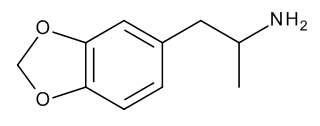
 (S)-MDA
 (R)-MDA
-MDA.svg)
-MDA.svg)


 Wikipedia


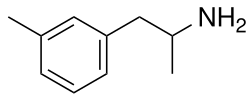
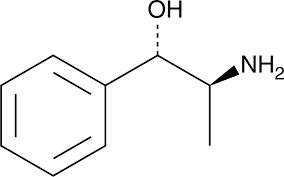
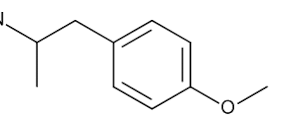
Reviews
There are no reviews yet.